← All books · People in the Hallways · Book 3
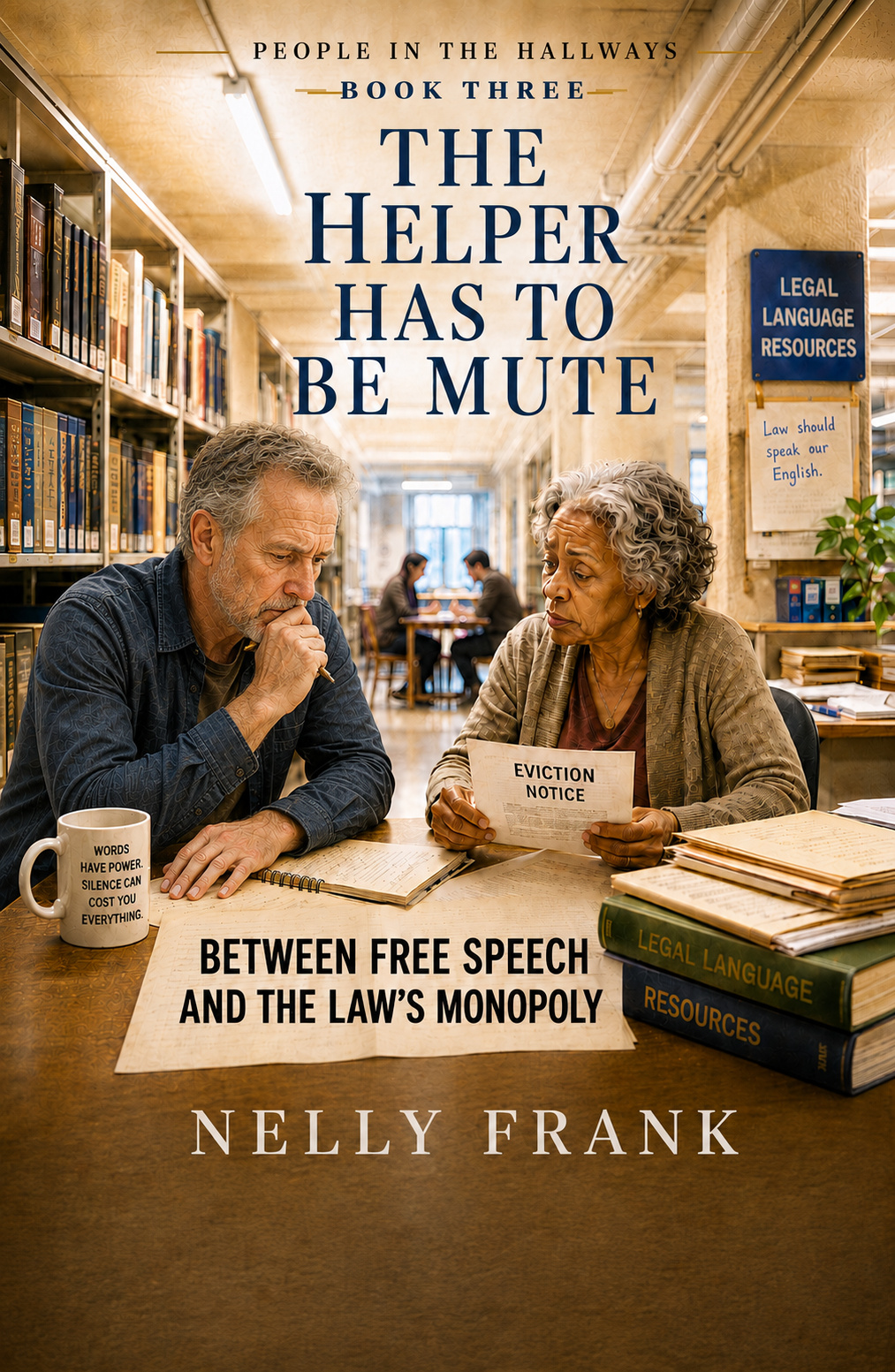
The Helper Has to Be Mute
Between Free Speech and the Law’s Monopoly
Synopsis
She wanted to help someone understand a document. Could that simple act put her in legal trouble?
In a legal-resource library, an older man and woman confront the intimidating language of an eviction notice. A helper's efforts to make the words understandable raise a troubling question: where does ordinary explanation end and unauthorized legal advice begin?
As institutions draw boundaries around who may speak and who must remain silent, the people who most need clarity risk being left in the dark. This novel explores the cost of confusing access to information with the practice of law—and asks who benefits when a helper is told to be mute.
Why I Wrote This Book
Author review draft — wording subject to Nelly Frank’s approval.
I wrote The Helper Has to Be Mute because people can face life-changing legal problems without being able to understand the documents or procedures involved. A notice concerning a home, a debt, or another important right may be written in language that is unfamiliar even to a careful reader. When professional help is beyond reach, turning to a knowledgeable neighbor or community volunteer can seem like the most natural thing in the world.
Yet the boundary between sharing legal information and giving legal advice can be difficult to navigate. Rules against the unauthorized practice of law are intended to protect people from harmful advice. But uncertainty about those rules can also discourage well-meaning helpers from explaining even basic information. That tension became the heart of the novel.
I wanted readers to consider both sides of the problem: the need for competent legal assistance and the need for people to understand what is happening to them. The story also pays tribute to the quiet helpers in libraries, community centers, and neighborhoods who try to make complicated information more accessible. Through the characters, I hope readers will ask how we can protect the public without turning understanding itself into a privilege.
Topics, Themes & Issues
Access to justiceLibrariesFree speechLegal languageCommunity education
What Will You Gain from Reading This Book?
A story about the power of clear explanations. Readers can consider the difference between helping someone understand a document and offering professional legal advice.
Reader resources
Explore the 72-term plain-language dictionary → or the IDEAL Method book club and book club and classroom guide →. Other Book 3 reader resources →
Amazon editions
Edition links are provided for convenience; check Amazon for current availability and pricing.